Under-eye hollows can make you look tired even when you are getting plenty of sleep. For some people it is genetics, for others it shows up gradually with age. Either way, tear trough filler is one of the most talked-about options for softening that hollowed look, but it is also one of the easiest areas to overdo.
This guide breaks down what under eye filler can realistically do, who it tends to work for, the recovery timeline, what it costs, and when you may be better off choosing another treatment.
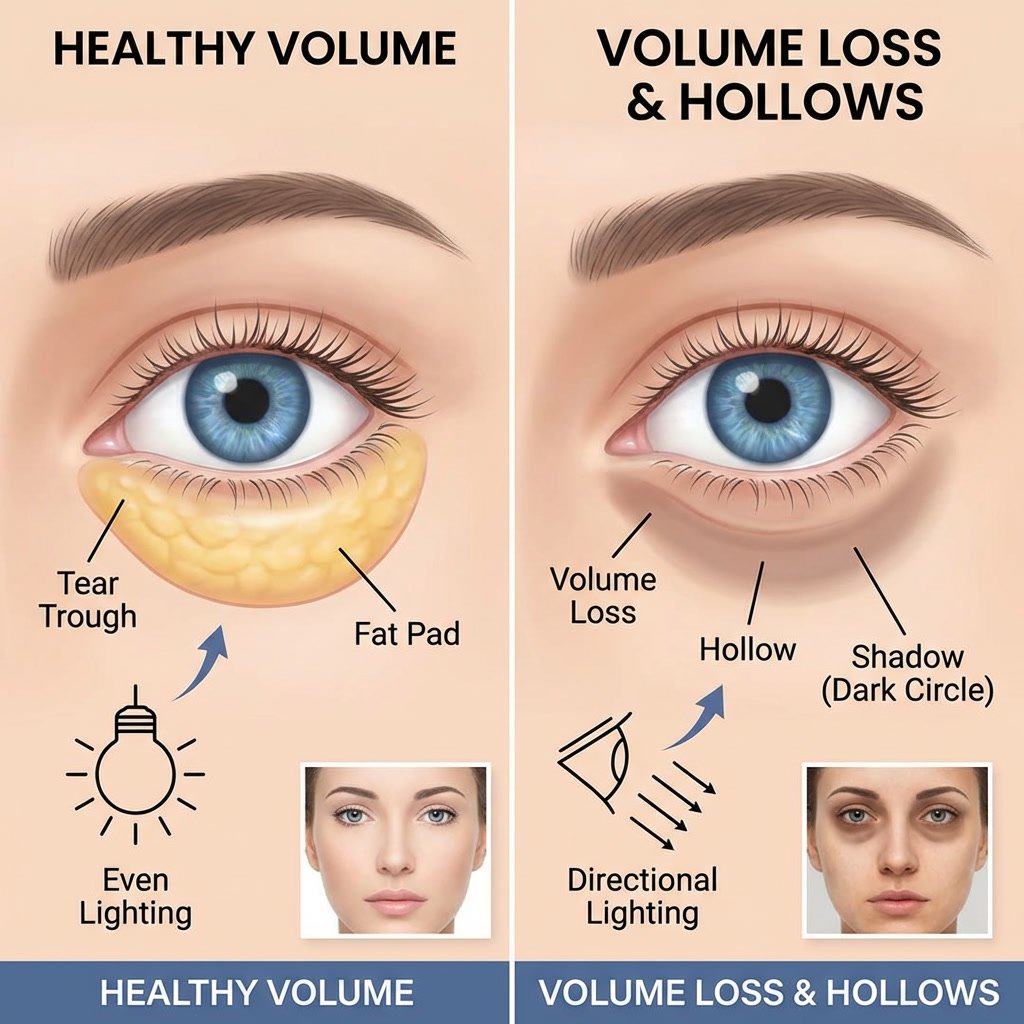
Table of Contents
What Under Eye Filler Is
Under eye filler, often called tear trough filler, is a type of injectable dermal filler placed in the area between the lower eyelid and the upper cheek. The goal is to reduce the shadow created by volume loss so the under-eye looks smoother and brighter.
What “tear trough” means
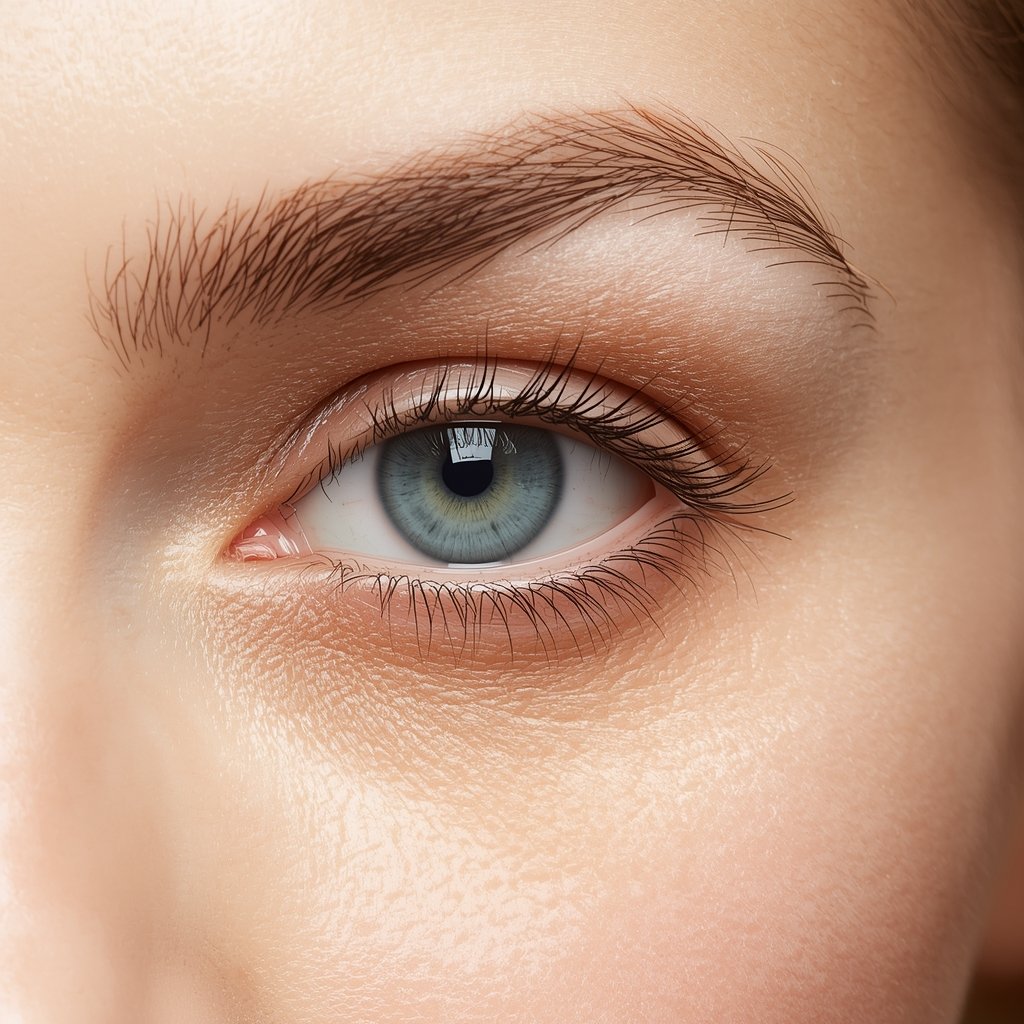
The tear trough is the natural groove that runs from the inner corner of your eye outward along the lower eyelid and upper cheek. When the area loses support, or when you are born with a deeper groove, light hits it differently and the under-eye can look darker or more hollow.
What filler can and can’t fix
Filler can help:
- Under-eye hollowing that creates shadowing
- A tired look caused by volume loss
- Some mild contour irregularities between the lid and cheek
Filler usually can’t fix:
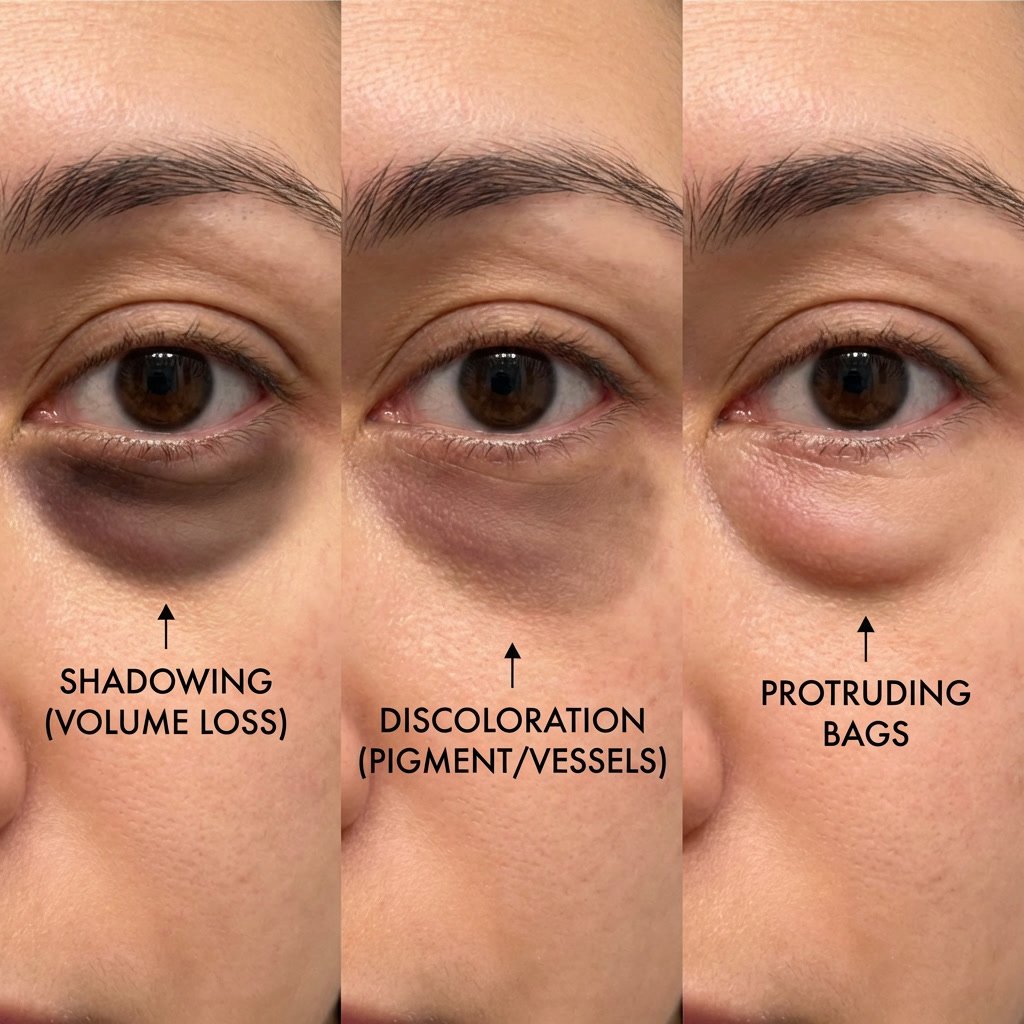
- Dark circles caused mainly by pigmentation
- Dark circles caused mainly by visible blood vessels under thin skin
- Prominent eye bags caused by fat prolapse, meaning true bags
- Puffiness from chronic fluid retention, since filler can worsen it for some people
Under Eye Hollows vs Dark Circles vs Eye Bags
A lot of people use “dark circles” to describe different issues. Here is a simple way to tell what might be going on.
Quick self-check at home
Stand in front of a mirror in natural light and:
- Look straight ahead.
- Tilt your chin slightly down.
- Use your finger to gently lift the cheek skin upward.
If the darkness improves when the cheek is lifted, that often points to shadowing from volume loss rather than pigment.
Signs it’s shadowing (volume loss)
- Darkness changes with lighting
- You see a groove or indentation
- The circle looks worse from the side or in overhead light
Signs it’s pigmentation or vascular
- Darkness looks similar in most lighting
- The area looks brown, which suggests pigment, or blue and purple, which suggests vascular
- The skin appears thin and you can see underlying vessels
Why Under Eyes Look Hollow (Common Causes)
Genetics vs aging vs lifestyle factors
- Genetics: Some people naturally have a deeper tear trough or a stronger contrast between lid and cheek.
- Aging: Bone structure shifts, fat pads move, and collagen decreases, so support changes and hollows can become more noticeable.
- Lifestyle factors: Weight loss, stress, allergies, and sleep disruption can make the under-eye look more depleted or puffy.
How Under Eye Filler Works
Hyaluronic acid and volume restoration
Most tear trough filler uses hyaluronic acid, a gel-like substance that attracts water and adds volume. In the under-eye, a tiny amount placed precisely can smooth the transition from lower lid to cheek so the shadow is less visible.
Because hyaluronic acid can be dissolved, many injectors prefer it for this area.
Typical Results (What “Good” Looks Like)
Natural correction vs overfilled look
A good result looks like:
- A smoother lid-to-cheek transition
- Less shadowing
- No obvious pillow effect under the eye
Overfilling can look like:
- Puffy or swollen under-eye
- A shelf or bulge where the filler sits
- Unnatural brightness or roundness that does not match the rest of the face
The under-eye is a “less is more” zone. Many providers use a conservative, staged approach.
Before-and-After Expectations
What photos don’t show (lighting, swelling)
Before-and-after photos can be helpful, but they can also be misleading because:
- Lighting changes can dramatically alter under-eye shadowing
- Early swelling can temporarily look like amazing volume
- Makeup and camera angles affect perceived darkness
Expect improvement, not perfection, especially if your darkness is partly pigment or vascular.
Who Is a Good Candidate
Mild to moderate hollowing
People with mild to moderate tear trough hollowing, especially shadowing, often see the best results.
Skin thickness and support
Under-eye filler tends to look better when:
- The skin is not extremely thin
- The midface and cheek provide support
- There is not significant fluid retention in the area
Who Should Avoid Under Eye Filler
Festoons and malar edema risk
If you are prone to festoons, meaning swelling or puffiness on the upper cheek area, or malar edema, under-eye filler can sometimes make puffiness more noticeable.
Significant eye bags or fat prolapse
If you have true protruding bags, adding volume may blur the contour in an unflattering way. Surgical options like lower blepharoplasty may be more appropriate for some people.
Under Eye Filler vs Treating Skin Quality
When lasers or resurfacing help more than filler
If your main issue is crepey texture, sun damage, or pigmentation, skin-focused treatments such as resurfacing, certain lasers, and professional skincare may do more than adding volume.
What Filler Is Used Under the Eyes
Why softer hyaluronic acid fillers are often chosen
Injectors often choose a softer hyaluronic acid filler that can integrate smoothly and minimize lumpiness in thin skin.
The role of swelling and attraction to water (general concept)
Hyaluronic acid attracts water. In the under-eye area, where fluid shifts are common, this matters. Some products and placements are more likely to look puffy than others. That is one reason conservative dosing and technique matter.
Cannula vs Needle (Pros & Cons)
Bruising and safety considerations
Some injectors use a cannula, which is a blunt-tipped tool, to reduce bruising risk and navigate planes more safely. Others prefer a needle for certain anatomy. There is not one “right” choice. What matters is skill, anatomy knowledge, and a plan for managing complications.
How Much Filler Do You Need?
Conservative dosing and staged approach
Many people need less than they think. A conservative approach might mean:
- Small amounts per side
- Let swelling settle
- Reassess at follow-up before adding more
This is one of the easiest ways to avoid the overfilled look.
Step-by-Step: What Happens During the Appointment
Consultation
A quality consult should cover:
- Whether you are dealing with hollows, pigment, vessels, or true bags
- Your medical history and any swelling tendencies
- Your goals, such as subtle refresh vs bigger change
In one of the largest cities in America, Chicago, Illinois, a multi-location medical spa operated by a nurse practitioner has published a very informative article on the topic. Here’s a helpful overview under eye filler in La Grange, IL.
Marking and placement
Your injector may mark the area and choose a placement technique based on your anatomy, degree of hollowing, skin thickness, and support from the cheek.
After-check and follow-up
Many clinics recommend a follow-up to assess swelling, symmetry, and whether a small touch-up is needed.
Does Under Eye Filler Hurt?
Numbing options and sensation
Most people describe pressure more than pain. Options may include topical numbing, ice, or filler that contains lidocaine. You may feel a pinch and some pressure during placement.
Recovery Timeline (Day 0 to Day 14)
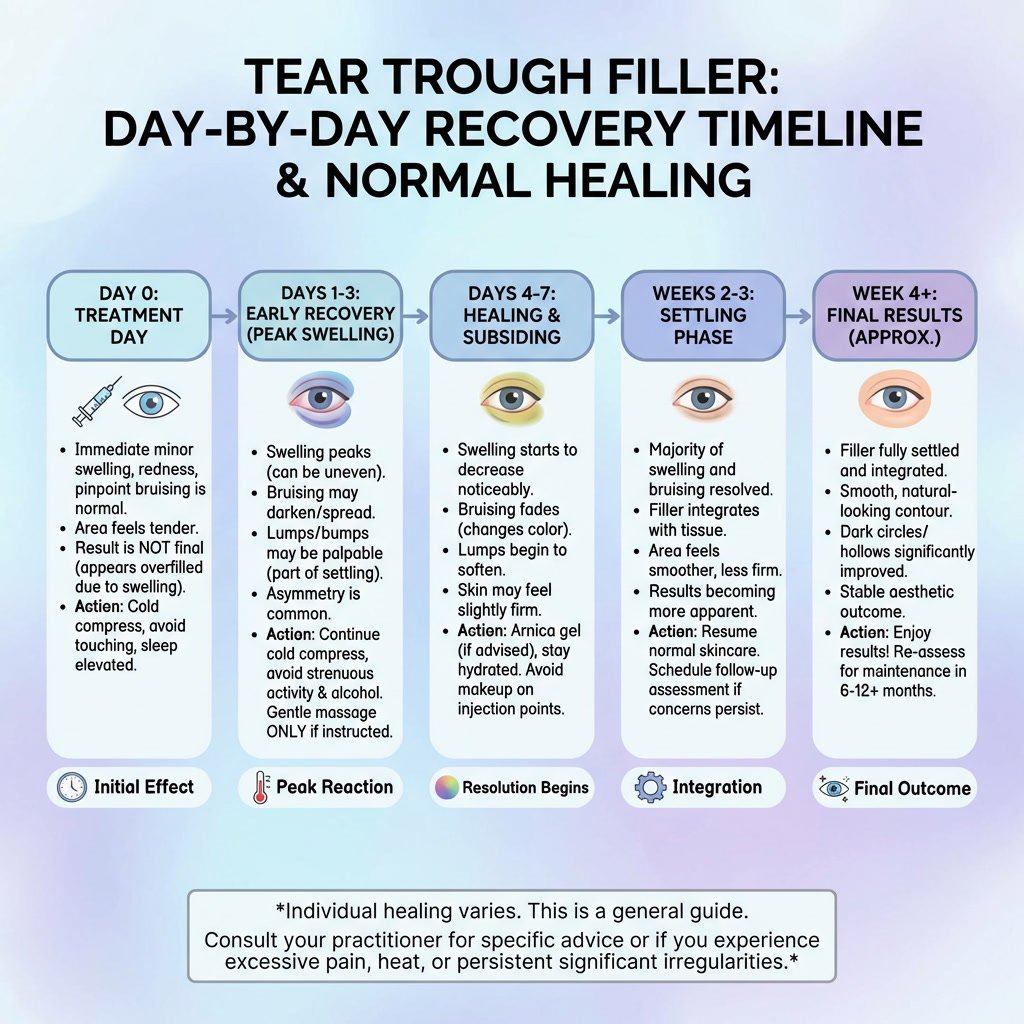
What’s normal
- Mild swelling, often worse the first 24 to 72 hours
- Tenderness
- Bruising, which varies and is more common for people who bruise easily
What’s not normal
- Severe, increasing pain
- Skin that looks white, gray, or mottled
- Blistering
- Vision changes
See the vascular occlusion section below. Those are urgent red flags.
Swelling After Under Eye Filler
Why swelling happens
Swelling is common because the tissue is delicate, hyaluronic acid attracts water, and your body responds to the injection.
When swelling becomes a concern
Swelling may be a concern if it keeps getting worse after several days, creates visible puffiness that does not improve, or comes with significant pain or discoloration.
Bruising After Under Eye Filler
Typical bruising stages
Bruises often shift from red and purple to blue to green and yellow and then fade. They may last a few days to two weeks depending on your skin and tendency to bruise.
How to cover bruising safely
Wait until any puncture sites are closed and follow your injector’s guidance on makeup timing. Use gentle products and avoid heavy rubbing.
Aftercare Do’s and Don’ts
Sleeping position
Sleep on your back with your head slightly elevated the first couple nights if you are prone to swelling.
Makeup timing
Follow your injector’s instructions. Many recommend waiting at least 24 hours.
Exercise and alcohol
Heavy exercise and alcohol can increase swelling and bruising for some people. Many providers recommend avoiding them for 24 to 48 hours.
When You’ll See Final Results
The two-week rule and touch-ups
A lot of injectors use the two-week mark as the final checkpoint, since swelling can mask the true result early on. Touch-ups, if needed, are often considered after things settle.
How Long Under Eye Filler Lasts
Factors that shorten or extend longevity
Longevity varies. Factors include product choice, amount used, metabolism, placement technique, and swelling tendencies.
Many people see results last somewhere in the range of several months to over a year, but individual variation is huge.
Under Eye Filler Cost (What Affects Price)
Region, injector experience, product choice
Cost depends on where you live, injector training and experience, product used, amount needed, and whether you are doing staged sessions.
Be cautious of cheap tear trough filler offers. This is an advanced area and should be treated that way.
Are There Serious Risks?
The most common side effects
- Swelling
- Bruising
- Tenderness
- Temporary unevenness
Rare but serious complications (plain-language)
Rare risks can include infection, prolonged swelling, or vascular compromise. These are uncommon, but you should know the warning signs.
Tyndall Effect (Blue/Gray Tint)
What causes it
Tyndall effect can happen when filler sits too superficially and light scatters through the gel, creating a blue or gray look.
How it’s fixed
Depending on the case, it may improve over time or be treated by dissolving hyaluronic acid filler.
Lumps, Bumps, and Unevenness
When to wait vs when to call your injector
Some unevenness early on can be swelling. Call your injector if you feel firm lumps that do not soften, asymmetry persists after swelling settles, or you are worried about color change or pain.
Migration and Puffy Under Eyes After Filler
How migration can look
It may appear as a puffy roll under the eye, a blurred lid and cheek contour, or puffiness that looks worse in the morning.
Correction options
Options may include observation, massage only if advised, or dissolving hyaluronic acid filler.
Vascular Occlusion: Warning Signs You Should Know
Symptoms that require urgent medical attention
Seek urgent medical attention immediately, and contact your injector, if you notice:
- Severe pain that escalates
- Blanching, meaning skin turning white, or dusky or mottled patches
- Coolness in the skin
- Blistering
Vision changes as an emergency
Any vision changes such as blurred vision, vision loss, or severe eye pain should be treated as an emergency.
Dissolving Under Eye Filler (Hyaluronidase)
What dissolving involves
Hyaluronidase is an enzyme that can dissolve hyaluronic acid filler. It may be used if there is persistent puffiness, Tyndall effect occurs, or there is an urgent complication.
What to expect afterward
You may see changes quickly, but swelling can occur from the dissolving process itself. Some people need more than one session.
How Long to Wait Before Refilling After Dissolving
Staged correction approach
Many providers prefer a staged approach: dissolve, let tissue calm down, then reassess anatomy and goals. The right timing depends on the situation and your provider’s plan.
Under Eye Filler vs Lower Blepharoplasty
Best candidates for each
Filler is best for hollows and shadowing with minimal true bagging. Lower blepharoplasty is often better for significant fat prolapse or pronounced bags. A consult is the best way to sort this out.
Under Eye Filler vs Fat Transfer
Longevity and downtime comparison
Fat transfer can offer longer-lasting volume for some people, but it typically involves more downtime and variability since some fat survives and some does not. Filler is less invasive and adjustable.
Under Eye Filler vs PRP/PRF
Who might prefer regenerative options
PRP or PRF may appeal to people who want subtle improvement in skin quality, prefer a regenerative approach, or are not a great candidate for under-eye volume filling. Results tend to be more gradual and modest.
Alternatives If You’re Not a Candidate for Filler
Skincare options (limitations)
Skincare can help texture and pigment, but it will not replace volume. Look for vitamin C for brightening, retinoids for texture and collagen support if tolerated, and sunscreen to help prevent pigment from worsening.
Makeup strategies (color correction)
If darkness is pigment or vascular, color correction can help. Peach or orange corrector can help blue or purple tones, yellow can help mild purple, and thin layers are usually more flattering than heavy concealer, which can emphasize texture.
How to Choose a Qualified Injector
Provider types (oculoplastic vs derm vs plastics)
Under-eye injections are advanced. Look for a licensed injector who regularly treats the under-eye area, can explain anatomy and product choice clearly, has a plan for complications and follow-up, and is willing to say “no” if you are not a good candidate.
Safety protocols to ask about
Ask what product they recommend and why, how they reduce bruising and swelling risk, what their plan is if you get prolonged puffiness or Tyndall effect, and whether they have hyaluronidase on-site.

Questions to Ask at Your Consultation
Product, volume, plan for complications
Bring questions like:
- Am I a better candidate for filler or surgery?
- How much do you recommend per side?
- Would you stage this in multiple visits?
- What should I watch for after I leave?
- If I do not like it, what are my options?
Common Mistakes to Avoid
Overfilling
Under-eye filler should look subtle. Chasing a perfectly flat under-eye often backfires.
Chasing pigmentation with filler
If your darkness is mostly pigment or vascular, filler may not be the right tool.
Quick Summary (Decision Guide)
Best for…
- Mild to moderate hollowing that creates shadowing
- People who want subtle, natural correction
- Those who can follow aftercare and attend follow-ups if needed
Not ideal for…
- Significant bags or fat prolapse
- Chronic puffiness or festoons
- Darkness mainly caused by pigment or vascular issues
Every mom deserves a moment of luxury. Explore why a med spa day is the ultimate self‑care experience for mothers.
FAQs
Is under eye filler safe?
It can be safe in qualified hands, but it is a higher-risk area than many other injection sites. Choose an experienced injector and know the warning signs.
How long does swelling last?
Many people see most swelling calm down in a few days, but subtle swelling can take up to two weeks to fully settle.
Can filler fix dark circles?
It can improve shadowing from hollows. If darkness is pigment or vascular, you may need skin-focused treatments instead.
What is the Tyndall effect?
A blue or gray tint that can happen if hyaluronic acid filler is placed too superficially.
What if I hate my results?
Hyaluronic acid filler can often be dissolved with hyaluronidase. Always discuss options with your injector.
Can under eye filler migrate?
It can appear to shift or look puffy over time, especially in people prone to swelling or if too much product was used.
How much does it usually cost?
Prices vary by region, injector, product, and how much is needed. A consult is the best way to get an accurate quote.
Is dissolving painful?
It can sting, but discomfort varies. Many providers use numbing options
How do I choose an injector?
Look for experience in under-eye injections, a conservative plan, clear safety protocols, and willingness to say “no” if you are not a good candidate.
What’s better, filler or blepharoplasty?
It depends. Filler is often best for hollows; blepharoplasty may be better for significant bags. A consult can clarify the best option for your anatomy.