TL;DR
- What is microneedling? Microneedling uses fine, sterile needles to create tiny controlled injuries in your skin, triggering your body to produce fresh collagen and elastin naturally.
- There are three types: mechanical (needles only), PRP (adds your own platelet growth factors), and RF (adds radiofrequency heat for skin tightening).
- It treats acne scars, fine lines, hyperpigmentation, stretch marks, enlarged pores, and uneven texture.
- Results build gradually over 3 to 6 months. This is real collagen your body creates, not a surface-level temporary glow.
- A typical series is 3 to 6 sessions spaced 4 to 6 weeks apart, with downtime of only 1 to 3 days of mild redness.
- At-home dermarollers at safe depths (0.25mm) are fine for product absorption between sessions, but they cannot replicate clinical results.
- Always go to a licensed, trained provider. The FDA classifies professional microneedling devices as Class II medical devices for a reason.
Table of Contents
What Exactly Does Microneedling Do?
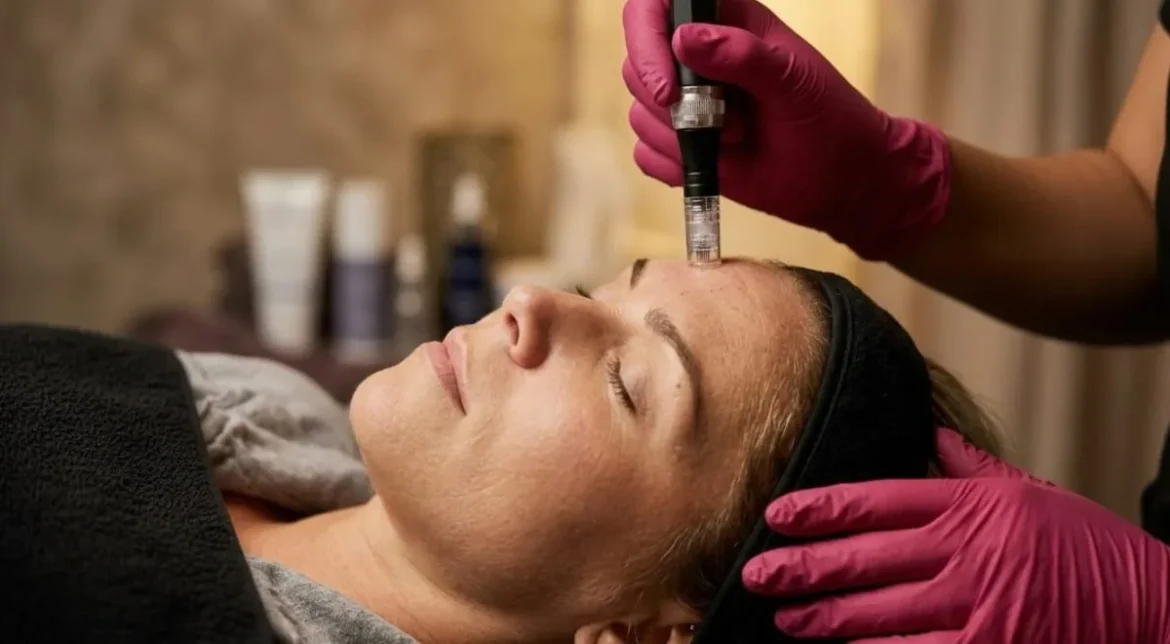
Microneedling creates thousands of microscopic channels in your skin using fine, sterile needles. Those channels are too small to cause visible damage, but they are large enough to trigger your body’s natural wound-healing response. The result is a surge of fresh collagen and elastin that smooths, firms, and renews your skin over the following months.
You might also see it called collagen induction therapy, which is honestly a more accurate name. The whole point of the treatment is to jumpstart your body’s own collagen production, something that naturally slows down as you age, after pregnancy, or from years of sun exposure.
The American Academy of Dermatology recognizes microneedling as an effective treatment for several common skin concerns. And because the FDA classifies professional devices as Class II medical devices, this is a treatment best performed by a trained, licensed provider in a clinical setting.
How Does Microneedling Work on Your Skin?
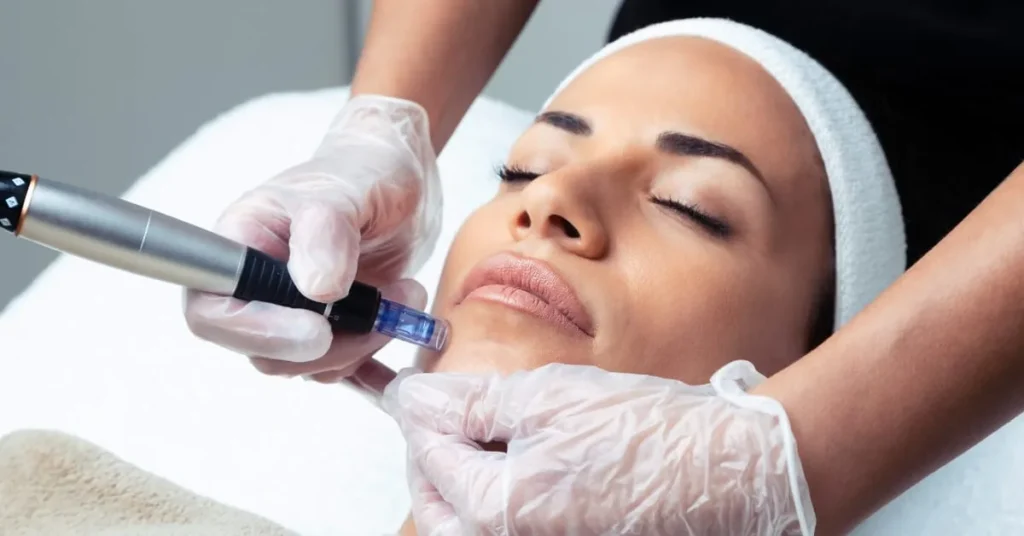
Microneedling works by activating your body’s natural healing process in four stages. The entire sequence is designed to build new collagen from the inside out, not just treat the surface.
Stage 1: Micro-channels form. Sterile needles create thousands of controlled punctures across the treatment area. Pinpoint bleeding sometimes occurs and is normal.
Stage 2: Your body responds. Within minutes, your immune system identifies the micro-injuries and sends platelets and growth factors to the area. This is the same wound-healing response that repairs a scraped knee, just targeted at a much smaller scale.
Stage 3: New collagen builds. Over the following weeks, fibroblasts (the cells responsible for producing collagen and elastin) ramp up and begin laying down new structural protein in the dermis. This is where the real transformation happens.
Stage 4: Skin remodels over 3 to 6 months. The new collagen matures, organizes, and reinforces your skin’s structure from within. This is why microneedling results look natural and last.
Here is the part that matters for busy mamas managing expectations: you will not see dramatic results the next morning. Initial texture improvement typically appears around 4 to 6 weeks, and the full effect of a session develops over 3 to 6 months. Your body needs time to build collagen. That is a feature, not a flaw.
For a detailed clinical walkthrough of the entire process from an NP’s perspective, this microneedling guide from Express Med Spa is one of the most thorough we have found.
The Three Types of Microneedling
This is the part most articles skip, and it matters. There is not one microneedling treatment. There are three primary variants, each with a different mechanism and a different sweet spot. Understanding which one fits your skin goals can save you time and money.
Mechanical Microneedling
Mechanical microneedling is the baseline: needles only, no added energy or products. It is the most affordable option, has the shortest visit time, and produces solid collagen results for early signs of aging, mild texture concerns, and superficial acne scars.
This is often the best starting point if you are new to microneedling, working within a budget, or dealing with mild skin concerns. It is also the safest variant for deeper skin tones, because there is no added thermal energy that could trigger post-inflammatory hyperpigmentation.
PRP Microneedling
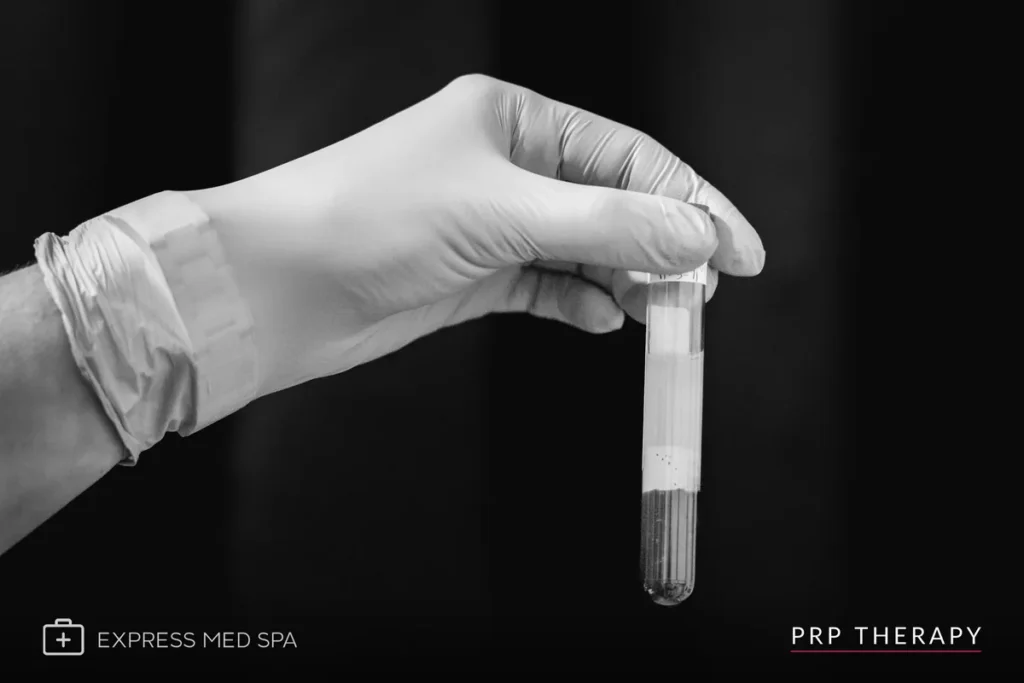
PRP microneedling adds platelet-rich plasma, drawn from your own blood, to the standard microneedling pass. At the start of your session, a small blood sample (comparable to a routine lab draw) is taken and spun in a centrifuge to separate the platelet concentrate. That PRP is then applied topically during and after the microneedling pass.
The growth factors in your own platelets absorb through the open micro-channels and amplify the collagen response. Peer-reviewed studies show modest-to-meaningful additive benefit over mechanical microneedling alone, especially for atrophic acne scars and age-related skin changes.
You may have heard this called the “vampire facial,” a name that stuck after a celebrity photo went viral in 2013. The clinical name is more accurate, and the treatment itself is far less dramatic than the nickname suggests.
RF Microneedling
RF microneedling adds radiofrequency energy to the microneedling pass. As the needles penetrate the dermis, RF energy delivered through the needle tips heats deeper tissue, creating small thermal zones that trigger additional collagen formation. The heat also causes immediate elastin contraction, providing a modest skin-tightening effect.
RF microneedling is the right choice when your concerns include mild-to-moderate laxity, deeper acne scars (especially boxcar scars), or skin tightening as an added goal. It is the most intensive of the three variants and typically costs more per session.
Quick Comparison: Which Type Is Right for You?
| Feature | Mechanical | PRP | RF |
|---|---|---|---|
| How it works | Needles only | Needles + your platelet growth factors | Needles + radiofrequency heat |
| Best for | Mild texture, fine lines, first-timers | Acne scars, skin renewal, enhanced collagen | Deeper scars, skin tightening, laxity |
| Session time | 60 minutes | 75-90 minutes | 75-90 minutes |
| Safe for darker skin tones | Yes (best option) | Yes | Use caution (thermal energy risk) |
| Relative cost | $ | $$ | $$$ |
What Does Microneedling Treat?
Microneedling has strong clinical evidence for several common skin concerns. Here is an honest look at what it does well and where expectations should be realistic.
Acne Scars
This is the indication with the strongest peer-reviewed evidence. Microneedling is well-established for atrophic acne scars, the indented kind, including rolling, boxcar, and ice pick subtypes. Rolling scars respond best. Boxcar scars respond moderately. Ice pick scars are the hardest to treat and often need a combination approach.
Realistic improvement: 30 to 60% in scar appearance, depending on scar type, variant chosen, and number of sessions. That is meaningful improvement, not erasure.
Microneedling is not appropriate for raised scars (hypertrophic or keloid). Those require different treatments entirely.
Fine Lines and Static Wrinkles
Microneedling addresses static wrinkles, the kind visible when your face is at rest, caused by collagen and elastin loss. By stimulating new collagen production, it helps rebuild the dermal scaffolding that aging gradually breaks down.
It does not treat dynamic wrinkles, the kind caused by muscle movement like frown lines and crow’s feet. Those are the domain of neurotoxins. Many women combine microneedling with neurotoxins to address both types in a single plan.
Hyperpigmentation and Sun Damage
Microneedling helps with post-inflammatory hyperpigmentation (PIH) and sun damage, especially when paired with a proper topical regimen and consistent sun protection. Melasma is more complex and requires cautious handling, as microneedling can sometimes make it worse without the right protocol.
Stretch Marks
Microneedling can improve the appearance of stretch marks, particularly newer red stretch marks on the abdomen, hips, and thighs. Mature white stretch marks respond less dramatically. Realistic improvement runs around 50 to 75% in appearance, not removal.
Enlarged Pores and Skin Texture
The collagen reinforcement around pore margins makes pores appear smaller. The pores themselves do not shrink, but the tissue around them tightens. For uneven texture from past breakouts, sun damage, or aging, microneedling smooths the surface gradually over a series.
What to Expect During a Microneedling Session
Knowing exactly what happens takes the mystery (and the anxiety) out of your first visit. Here is the step-by-step.
- Consultation and skin assessment (15 to 30 minutes for your first visit). Your provider evaluates your skin, discusses your goals, and recommends the right variant and depth.
- Topical numbing (20 to 30 minutes). A numbing cream is applied so the treatment is comfortable. For PRP sessions, your blood draw happens during this window so the centrifuge can process while you wait.
- Cleanse. The numbing cream is removed and your skin is thoroughly cleansed.
- The microneedling pass (15 to 30 minutes). The pen moves across your treatment area in even strokes. Most women describe the sensation with numbing as a 2 to 4 out of 10 on the discomfort scale.
- Soothing serum. A hyaluronic acid layer is applied (PRP if you chose that variant), followed by mineral SPF if you are heading outside.
- Aftercare instructions. You leave with a clear protocol for the next 7 to 14 days.
Total visit time: 60 to 90 minutes. PRP and RF variants are on the longer end.
How Many Sessions Will You Need?
The number of sessions depends on what you are treating. Here is a general guide.
| Concern | Sessions | Spacing |
|---|---|---|
| General skin renewal (fine lines, texture, pores) | 3 to 4 | 4 to 6 weeks apart |
| Acne scars | 4 to 6 | 4 to 6 weeks apart |
| Stretch marks | 6 to 10 | 4 to 6 weeks apart |
| Annual maintenance | 1 per year | Ongoing |
Your provider will set the exact cadence based on your skin and goals at your first consultation.
If you are still exploring your options before committing to injectables, these 5 non-invasive beauty treatments built for mom life give you a solid comparison of what is available at a med spa without any downtime pressure.
Downtime and Aftercare: What Busy Mamas Need to Know
This is where microneedling really shines for women who cannot take a week off from life. Downtime is minimal.
Expect mild redness for 1 to 3 days, similar to a light sunburn. Mild dryness, peeling, and tightness in the days after are normal and are actually a sign the collagen response is underway.
The aftercare non-negotiables:
- Mineral SPF 30+ daily for at least 14 days. This is the single most important rule for protecting your results.
- No active ingredients (retinol, AHAs, BHAs, vitamin C serums) for 5 to 7 days.
- No sauna, steam, hot yoga, or chlorine for 3 to 5 days.
- No makeup for 24 to 48 hours.
Follow these rules and your skin will thank you. Skip the SPF and you risk undoing everything the treatment just built.
Microneedling at Home vs. Professional: The Real Difference
This deserves a straight answer. At-home dermarollers exist, and some of them are perfectly fine for what they are. The key is understanding what they can and cannot do.
At-home rollers at 0.25mm depth are too shallow to trigger clinical collagen production. They may help your serums absorb slightly better, and they are generally safe to use weekly with a clean roller.
Clinical microneedling uses 1.5 to 2.5mm depth. That is the range where real collagen induction happens. At-home devices at consumer-safe depths simply do not reach the tissue that matters.
A few more things worth knowing:
- Sterility matters. A reused at-home roller, even one you clean carefully, carries infection risk. Professional clinics use single-use sterile cartridges, one per patient, discarded immediately after.
- At-home rollers cannot deliver PRP or RF energy. Two of the three microneedling variants do not exist outside a clinical setting.
- At-home rollers can trigger hyperpigmentation if used on the wrong skin type or without proper sun protection.
The bottom line: light at-home rolling (0.25mm) is fine for maintenance between professional sessions. For acne scars, hyperpigmentation, fine lines, or any real skin concern, professional treatment is the way to go.
Is Microneedling Safe?
Microneedling is generally safe when performed by a trained, licensed provider with proper screening. That said, it is not for everyone.
You should not get microneedling if you have:
- Active skin infection at the treatment site
- Used isotretinoin (Accutane) within the last 6 months
- A history of keloid scarring
- Are pregnant
- Severe active cystic acne
- Open wounds at the treatment site
- Recent radiation therapy
- For PRP specifically: active bleeding disorders or anticoagulation therapy
If any of these apply, a good provider will recommend an alternative treatment that is safe for your situation. A provider who does not ask about these things before treating you is a red flag.
How Long Do Microneedling Results Last?
A completed microneedling series produces collagen that remains visible for 6 to 12 months or longer. Lifestyle factors affect how long the results hold: sun exposure, smoking, sleep quality, and nutrition all play a role.
Annual maintenance sessions extend the benefits indefinitely. Think of it like this: your body built new collagen, and a yearly session keeps that investment compounding.
For a clinical overview of how microneedling works and what to expect, the Mayo Clinic’s microneedling guide is a reliable starting point.
Microneedling vs. Chemical Peels: How Do They Compare?
Both microneedling and chemical peels are collagen-stimulating skin renewal treatments, but they work through completely different mechanisms. Microneedling creates mechanical micro-injuries to trigger collagen from within. Chemical peels use controlled acid exfoliation to remove damaged outer layers and stimulate renewal from the surface down.
Neither is universally better. Microneedling tends to be the stronger choice for acne scars and deeper textural concerns. Chemical peels often work better for surface-level discoloration and dullness. Many women use both over time as part of a comprehensive skin renewal plan.
Key Takeaways
- Microneedling is collagen induction therapy: controlled micro-injuries that trigger your body to produce new collagen and elastin naturally.
- Three types exist (mechanical, PRP, RF), each with different strengths. Your provider should recommend the right one for your specific concerns.
- The strongest evidence is for atrophic acne scars (30 to 60% improvement), with meaningful results also seen for fine lines, hyperpigmentation, stretch marks, and skin texture.
- Results build over 3 to 6 months. This is a gradual, natural process, not an overnight transformation.
- Downtime is 1 to 3 days of mild redness. SPF is non-negotiable during aftercare.
- At-home rollers are fine for light maintenance, but professional treatment is required for real results.
- Always choose a licensed, trained provider who screens you properly before treatment.
Found this helpful? Share it with a mama who needs it, and drop your biggest skin question in the comments below.
Always consult with a licensed provider before booking any treatment.
Frequently Asked Questions
What exactly is microneedling?
Microneedling is a skin renewal treatment that uses fine, sterile needles to create thousands of tiny controlled injuries in your skin. Your body responds by producing new collagen and elastin, gradually improving texture, fine lines, acne scars, and hyperpigmentation over 3 to 6 months. It is also called collagen induction therapy.
Does microneedling hurt?
With topical numbing cream applied before the treatment, most women rate the sensation as a 2 to 4 out of 10 on the discomfort scale. It feels like light prickling or vibration across the skin. The numbing cream sits for 20 to 30 minutes before the procedure begins, so you are well-prepared.
How many microneedling sessions do I need?
A typical series is 3 to 4 sessions for general skin renewal and 4 to 6 sessions for acne scars, spaced 4 to 6 weeks apart. Stretch marks may need 6 to 10 sessions. Your provider will set the right plan at your consultation based on your skin and goals.
How long do microneedling results last?
Results from a completed series last 6 to 12 months or longer. Lifestyle factors like sun protection, nutrition, and sleep quality affect longevity. One annual maintenance session keeps the collagen benefits compounding over time.
What is the difference between microneedling and PRP microneedling?
Standard mechanical microneedling uses needles only. PRP microneedling adds platelet-rich plasma, drawn from your own blood and applied during the treatment, to deliver extra growth factors through the open micro-channels. Studies show PRP provides additive benefit, especially for acne scars and skin renewal.
Can I do microneedling at home?
At-home dermarollers at 0.25mm are safe for light product-absorption maintenance between professional sessions. However, clinical microneedling uses 1.5 to 2.5mm depth, which is where real collagen induction occurs. At-home devices cannot reach that depth safely, cannot deliver PRP or RF energy, and carry higher infection risk with reused rollers.
What is the downtime after microneedling?
Expect 1 to 3 days of mild redness similar to a light sunburn. Mild dryness and peeling are normal. You should avoid makeup for 24 to 48 hours, skip active ingredients (retinol, AHAs, BHAs) for 5 to 7 days, and wear mineral SPF 30+ daily for at least 14 days.
Is microneedling safe for all skin tones?
Mechanical microneedling is generally safe for all skin tones and is considered the safest variant for deeper complexions. RF microneedling requires more caution with darker skin tones because the thermal energy can trigger post-inflammatory hyperpigmentation. A knowledgeable provider will choose the right variant and settings for your skin tone.
Who should not get microneedling?
You should avoid microneedling if you have an active skin infection, have used isotretinoin (Accutane) within 6 months, have a history of keloid scarring, are pregnant, have severe cystic acne, or have open wounds at the treatment site. For PRP, active bleeding disorders are also a contraindication.
Is microneedling better than a chemical peel?
They work differently and each has strengths. Microneedling tends to be better for acne scars and deeper texture concerns. Chemical peels are often more effective for surface discoloration and dullness. Many women incorporate both treatments over time as part of a broader skin renewal plan. Your provider can help you decide which makes sense to start with.